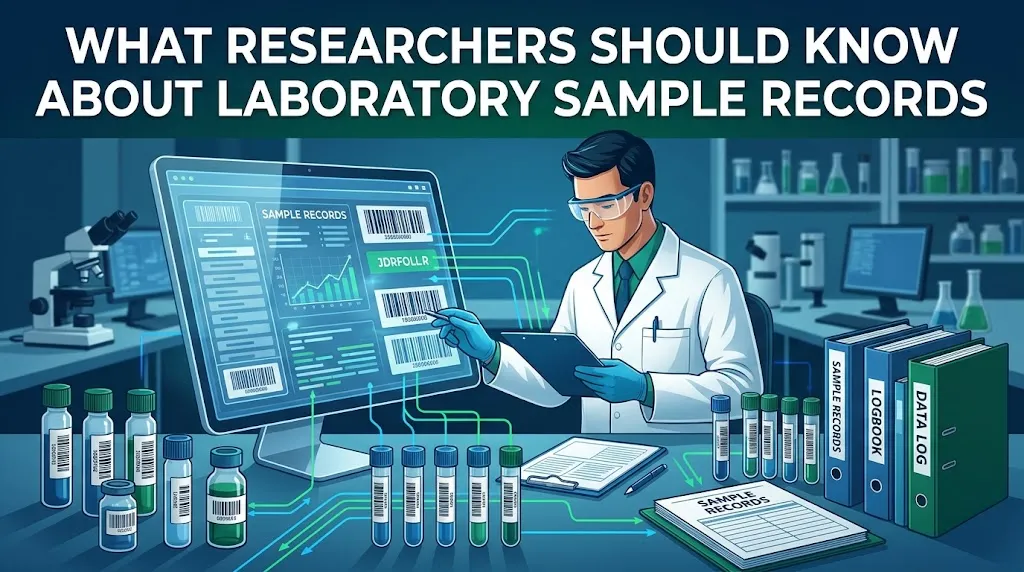
Accurate sample records are an important part of responsible laboratory research. They help researchers understand where a material came from, when it entered a laboratory, how it was identified, and what happened to it during its documented lifecycle. Without reliable records, it can become difficult to interpret analytical findings or establish whether a report relates to the correct sample.
For laboratories reviewing research materials from suppliers such as Remy Research, maintaining clear sample documentation can support consistency, accountability, and better internal recordkeeping.
1. What Are Laboratory Sample Records?
A laboratory sample record is a documented account of an individual sample and its relevant history. It may include information about the sample’s source, receipt, identification, physical condition, storage, transfers, analytical testing, and final disposition.
These records are different from general product information. A product description identifies the material being supplied, while a sample record documents a particular sample handled by the laboratory.
The level of detail required depends on the laboratory’s procedures, research objectives, and applicable documentation requirements.
2. Creating a Sample Record at Receipt
A sample record should be created when a material is received or formally entered into a laboratory’s recordkeeping system.

The initial entry may include:
- Date and time of receipt.
- Supplier or source information.
- Product or material description.
- Sample identification number.
- Referenced batch or lot number, where provided.
- Quantity or package information as recorded.
- Name or identifier of the receiving staff member.
- Any accompanying documentation.
Recording these details at the beginning helps establish a clear starting point for the sample’s documented history.
3. Recording the Sample’s Initial Condition
The condition of a sample at receipt should be documented objectively. Laboratories should record observations rather than make assumptions about material quality.
Depending on the material and laboratory procedures, observations may include:
- Whether the packaging appears intact.
- Whether the product label is readable.
- Whether the container shows visible damage.
- Whether the received quantity matches the accompanying records.
- Whether any visible discrepancy or irregularity is present.
If an issue is identified, it should be recorded and handled according to the laboratory’s internal procedures.
A condition entry is an observation made at a particular time. It should not be treated as proof of chemical identity, purity, or suitability for a particular research purpose.
4. Maintaining a Clear Sample Identification System
Every sample should have a unique identifier within the laboratory’s recordkeeping system. This identifier allows staff to locate the correct record without relying only on product names or supplier descriptions.
A useful sample identification system should be:
- Unique within the laboratory.
- Consistent with internal procedures.
- Easy for authorized staff to locate.
- Clearly associated with the relevant sample record.
- Distinguishable from supplier batch numbers and report references.
For example, a laboratory may assign an internal reference such as LAB-2026-0042. This is an illustrative identifier, not a supplier-issued batch number.
The internal reference should remain connected to the original receipt record throughout the sample’s documented lifecycle.
5. Documenting Transfers and Handling History
A sample may move between receiving staff, storage locations, laboratory departments, or analytical service providers. Each relevant transfer should be documented according to the laboratory’s procedures.
A transfer entry may include:
- Date and time of transfer.
- Previous and new location.
- Person releasing the sample.
- Person receiving the sample.
- Reason for the transfer.
- Any relevant condition observations.
This creates a record of who handled the sample and where it was recorded as being located.
A documented transfer history can help laboratories investigate missing records, unexplained discrepancies, or questions about sample handling.
6. Recording Aliquots and Derived Samples
Some laboratory workflows involve dividing an original sample into smaller portions or creating derived samples for separate analytical activities.
When this occurs, the laboratory should maintain a clear relationship between the original sample and each resulting portion.
The record may identify:
- The original sample reference.
- The new aliquot or derived-sample identifier.
- The date the new record was created.
- The person responsible for the documented activity.
- The relationship between the original and resulting records.
For example, an original sample may be assigned the reference LAB-2026-0042, while two separately recorded portions receive identifiers such as LAB-2026-0042-A and LAB-2026-0042-B.
These examples illustrate a recordkeeping approach only. Laboratories should use their own approved identification and handling procedures.
7. Connecting Sample Records with Analytical Reports
Analytical reports should be connected to the sample they actually identify. This is particularly important when a laboratory receives several samples with similar product descriptions.
A report reference may include:
- Report or document number.
- Testing laboratory name, where stated.
- Sample reference used by the testing laboratory.
- Report issue date.
- Analytical method described in the report.
- Results and limitations stated by the testing laboratory.
Researchers should compare the report’s sample reference with the laboratory’s own records before associating the findings with a particular sample.
A report should not automatically be treated as evidence for every package or batch of a similarly named product. Its scope must be understood from the document itself.
For laboratories reviewing Research Peptides UAE, the same principle applies: product information and analytical documentation should be assessed according to the specific identifiers and scope provided in the available records.
8. Recording Storage and Retention Information
Sample records should reflect relevant storage and location information in accordance with the material’s documented requirements and the laboratory’s procedures.
Useful record fields may include:
- Assigned storage location.
- Date the sample entered storage.
- Relevant storage-condition records.
- Documented location changes.
- Access or handling entries, where required.
- Retention status.
Laboratories should avoid recording assumptions as confirmed facts. If a storage condition has not been independently monitored or documented, the record should not imply that continuous monitoring took place.
Retention periods should follow applicable requirements and the laboratory’s approved record-retention policy.
9. Documenting Discrepancies and Record Corrections
Errors and discrepancies can occur during sample receipt, data entry, transfers, or document review. A reliable recordkeeping system should preserve the history of corrections rather than silently replacing original entries.
A correction record may identify:
- The original entry.
- The corrected information.
- The date of correction.
- The person making the change.
- The reason for the correction.
Where a discrepancy cannot immediately be resolved, it should remain clearly identified as an open issue until the laboratory follows its established review process.
This approach helps preserve the reliability and transparency of the sample record.
10. Closing a Sample Record
A sample record should have a clear closure status when the laboratory no longer considers the sample active within its workflow.
Depending on internal procedures, closure may relate to:
- Completion of the documented research activity.
- Transfer to another authorized location or organization.
- Disposal under the laboratory’s approved procedure.
- Return to the original source.
- End of the applicable retention period.
The closure entry should include the date, relevant action, responsible person, and any supporting documentation required by the laboratory.
Closing a record does not mean deleting its history. Previous entries and associated reports should remain accessible according to the laboratory’s record-retention policy.
11. Common Sample Recordkeeping Mistakes
Several documentation problems can make sample histories difficult to interpret:
Using product names as the only identifier: Similar products may have different sample or batch references.
Failing to record receipt details: Missing dates or source information can make the beginning of a sample’s history unclear.
Leaving transfers undocumented: Without transfer entries, the recorded location and handling history may become uncertain.
Separating reports from sample records: Analytical documents can lose context when their sample references are not linked to the relevant laboratory record.
Overwriting previous entries: Silent changes make it difficult to understand how a record developed.
Treating assumptions as verified information: Observations, supplier-provided details, and independently confirmed findings should be distinguished.
12. A Practical Sample Record Checklist
Before considering a sample record complete, laboratory staff can review the following points:
- Is the sample assigned a unique internal identifier?
- Is its source or supplier recorded?
- Is the receipt date documented?
- Is the initial packaging condition recorded?
- Are relevant product and batch references included?
- Are transfers and location changes documented?
- Are aliquots or derived samples linked to the original record?
- Are relevant analytical reports attached or cross-referenced?
- Are discrepancies and corrections documented?
- Is the current record status clear?
- Is the retention or closure information available?
This checklist can be adapted to the laboratory’s research activities and internal procedures.
Conclusion
Laboratory sample records provide a documented history of how research materials enter, move through, and leave a laboratory’s workflow. Clear identification, receipt information, condition observations, transfer history, analytical report references, and closure details help researchers maintain a consistent record of each sample.
Good documentation does not replace analytical testing or establish scientific conclusions by itself. Instead, it provides the supporting information needed to understand the identity, history, and documented status of laboratory samples.
All research materials discussed in this article must be treated strictly as research-use-only materials for in-vitro laboratory research. They are not intended for human or veterinary use, diagnosis, treatment, or administration.