Introduction
Maintenance needs can change significantly as a business grows. A small company with limited equipment may be able to handle occasional servicing when required, while a larger organization may need a dedicated and structured approach to maintaining multiple systems.
Knowing when to move from occasional maintenance to a formal service agreement can help businesses avoid unnecessary costs and operational problems.
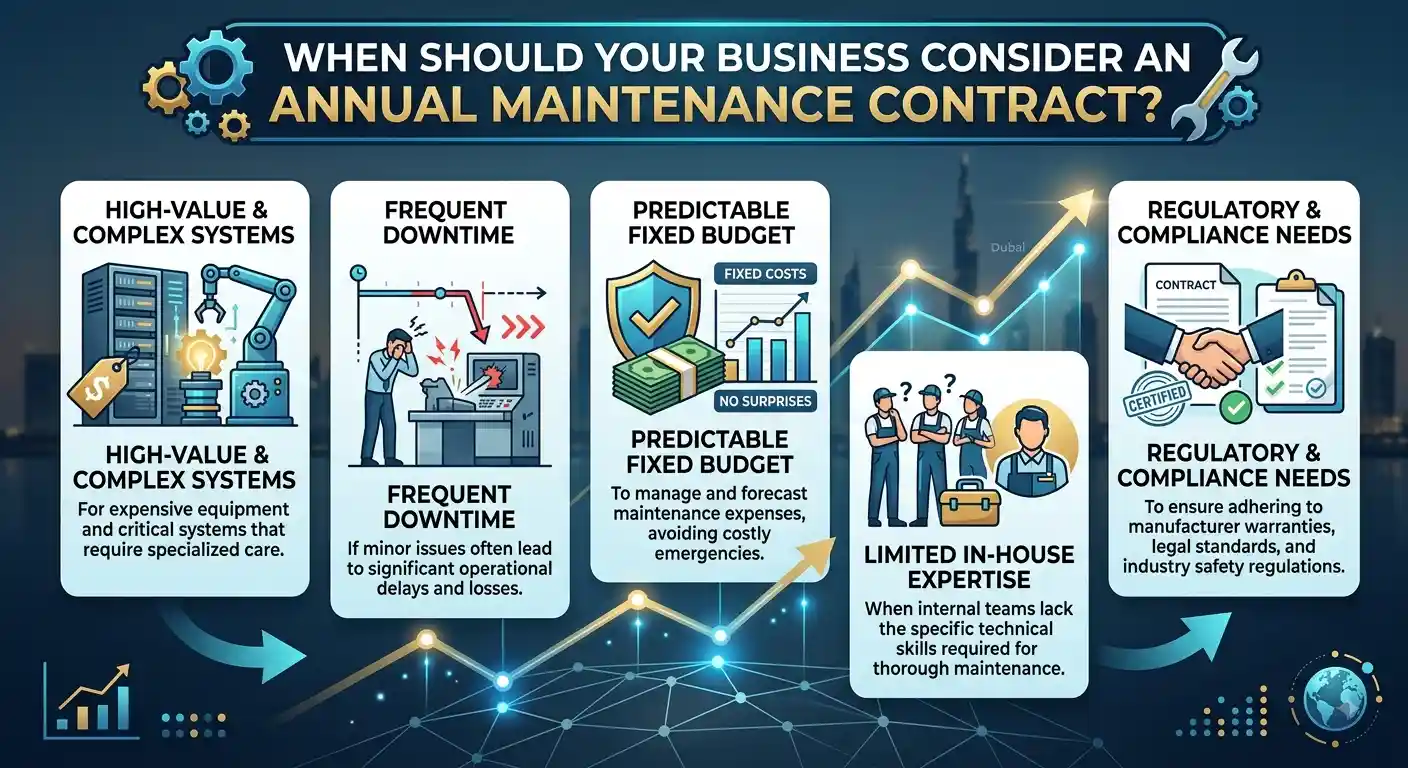
An Annual Maintenance Contract can be particularly useful when equipment is critical to daily operations, maintenance requirements are becoming difficult to manage, or unexpected breakdowns are creating repeated disruption.
When Equipment Becomes Critical to Operations
A business should consider a structured maintenance arrangement when its operations depend heavily on specific equipment or building systems.
If the failure of an air conditioning system, generator, production machine, electrical installation, or other essential asset could interrupt normal operations, regular servicing becomes increasingly important.
Critical equipment should not be maintained only after it develops a serious fault. Planned inspections can provide an opportunity to identify potential problems before they affect business activities.

When Repair Requests Become Frequent
Repeated repair calls are another sign that a company may benefit from an organized maintenance strategy.
If the same equipment requires technicians several times a year, the business may be spending more on reactive repairs than necessary.
Frequent breakdowns can also indicate that routine servicing is being overlooked.
A professional maintenance program can help identify recurring faults and determine whether the underlying problem requires a permanent repair, component replacement, or equipment upgrade.
When Maintenance Costs Become Difficult to Predict
Unexpected repair expenses can make financial planning challenging.
A business may budget for normal operations but suddenly face a large technical repair bill when an important system fails.
A structured maintenance agreement can make certain servicing costs more predictable by defining the services and pricing in advance.
Businesses should still review exclusions, spare parts policies, major repair charges, and emergency service fees before signing.
When Equipment Is Getting Older
Older equipment generally requires closer attention because components can experience increased wear over time.
As equipment ages, businesses may notice more frequent repairs, reduced performance, or difficulty finding replacement components.
This does not automatically mean that old equipment must be replaced.
Regular inspections can help determine its actual condition and whether continued maintenance remains economically practical.
When the Business Has Multiple Systems
Managing one or two pieces of equipment is relatively straightforward.
The situation becomes more complicated when a business operates multiple HVAC units, electrical systems, pumps, generators, plumbing networks, machinery, or other assets.
Without a centralized maintenance plan, some systems may receive regular attention while others are overlooked.
A structured service agreement can help organize maintenance across multiple assets and establish a consistent schedule.
When There Is No Dedicated Maintenance Team
Small and medium-sized businesses may not have full-time technicians on staff.
Employees may be responsible for reporting problems, but they may not have the technical expertise needed to inspect or service complex equipment.
In such situations, an external maintenance provider can provide access to qualified professionals without requiring the business to build a complete internal maintenance department.
When Downtime Is Expensive
Some businesses can tolerate minor equipment interruptions, while others cannot.
A production line that stops unexpectedly, a commercial cooling system that fails during operating hours, or an electrical issue that affects essential equipment can create significant disruption.
When downtime has a noticeable financial impact, preventive servicing becomes more valuable.
Regular inspections can help reduce some of the risks associated with unexpected equipment failure.
When Emergency Repairs Are Becoming Routine
Emergency maintenance should not become the normal way a business manages its equipment.
If technicians are being called only after a failure occurs, the company may be operating a largely reactive maintenance strategy.
Frequent emergency repairs can indicate that equipment requires more consistent preventive attention.
A planned service agreement can shift the focus toward identifying and addressing problems before they become urgent.
When Equipment Performance Is Declining
Equipment does not always fail suddenly.
Performance may gradually decline because of worn components, contamination, poor adjustments, electrical issues, or other technical conditions.
Businesses may notice reduced cooling, unusual sounds, slower machinery, inconsistent output, or other changes.
These signs should be investigated rather than ignored.
Scheduled maintenance provides an opportunity for technicians to assess equipment condition and recommend appropriate corrective action.
When Asset Protection Becomes a Priority
Business equipment can represent a major investment.
Companies that want to protect these assets should consider maintenance as part of their overall asset management strategy.
Regular servicing can help businesses monitor equipment condition, address developing faults, and maintain records of repairs and inspections.
This information can also help managers determine when an asset should be repaired, upgraded, or replaced.
When the Business Expands
Business expansion often brings additional maintenance responsibilities.
A company may move into a larger facility, add machinery, install additional cooling systems, or open new locations.
As the number of assets increases, informal maintenance arrangements may become difficult to manage.
A professional maintenance contract can provide a more organized approach to servicing multiple systems.
When Compliance and Documentation Matter
Certain businesses operate equipment or facilities that require documented inspections and maintenance procedures.
Proper records can help demonstrate that scheduled maintenance activities have been performed.
The exact documentation and inspection requirements depend on the equipment, property, and applicable regulations.
Businesses should therefore confirm their specific requirements and ensure that their maintenance provider can provide appropriate records.
When Employees Are Losing Time to Maintenance Issues
Maintenance problems can affect more than equipment.
Employees may spend valuable working hours reporting recurring faults, arranging technicians, monitoring repairs, or dealing with operational interruptions.
A professional maintenance arrangement can centralize these responsibilities and provide an established process for handling technical issues.
This can allow employees to focus more closely on their primary business responsibilities.
What to Check Before Signing an AMC
Once a business decides that an annual maintenance agreement is appropriate, the next step is selecting the right provider.
The company should review the service scope, maintenance frequency, response times, emergency support, technician qualifications, exclusions, and pricing.
It is also useful to determine whether the provider has experience with the specific equipment and systems installed at the business.
A clear written agreement is important because it defines what both parties can expect during the contract period.
How to Determine Whether the Contract Offers Value
The cost of an AMC should be compared with the potential benefits it provides.
Businesses can consider current repair expenses, equipment downtime, asset value, maintenance frequency, and the availability of internal technical expertise.
A contract may offer strong value when it provides consistent preventive maintenance and reduces the need for repeated emergency intervention.
However, businesses should avoid paying for services they do not actually require.
Final Thoughts
There is no single point at which every business must sign an Annual Maintenance Contract. The decision depends on equipment importance, maintenance frequency, operational risk, asset value, business size, and available technical resources.
An AMC becomes particularly useful when breakdowns are frequent, downtime is expensive, equipment is aging, maintenance costs are unpredictable, or a business operates multiple technical systems.
Before making a commitment, businesses should assess their actual maintenance requirements and compare suitable providers.
A well-designed agreement can turn maintenance into a planned business function, helping companies manage equipment more effectively and maintain reliable operations throughout the year.
Related Reading: Trendy ponytail hairstyles for parties and business meetings
Related Reading: ما هي أفضل استراتيجيات استخدام مؤشرات الفوركس؟ — full guide
Related Reading: Why Cloud Hosting Uae Matters for Your UAE Business Strategy
Related Reading: What is the importance of legal due diligence when buying or investing in a business in the UAE? — full guide
Related Reading: Carrier AC Maintenance Tips for Hot Weather Conditions